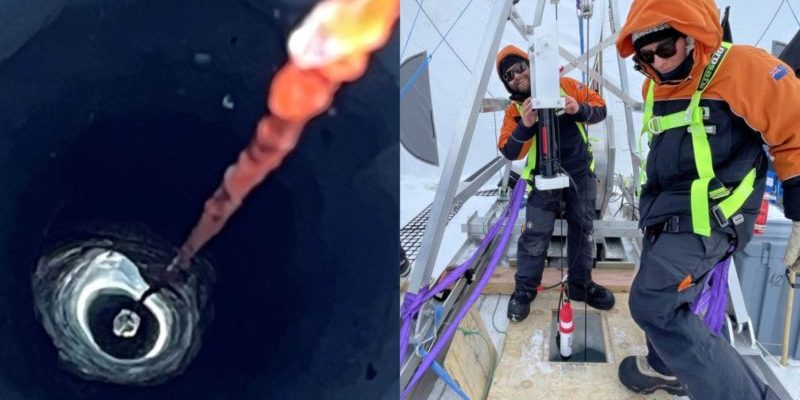
In a cathedral-like tunnel 1600 feet underneath the Antarctic town’s largest ice shelf, a fascinating world was revealed.
A secret habitat of marine life has been uncovered 1600 feet below the surface of the Ross Ice Shelf.
Researchers from New Zealand’s Central Institute of Water and Atmospheric Studies (NIWA) was using a hot hose pipe to break thru the ice cover.
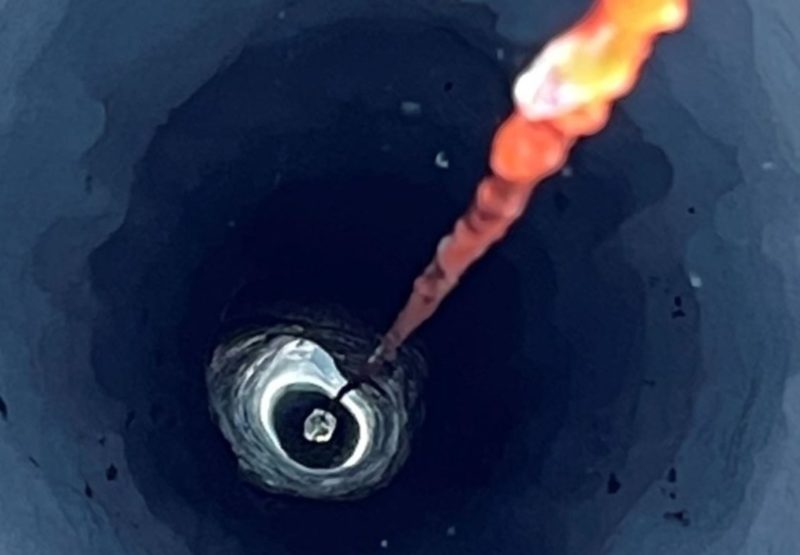
There they expected a river of meltwater to study melting speeds around the Ross Ice Shelf, the nation’s largest ice shelf.
Researchers have suspected the presence of secret rivers under the ice sheets, but what they have uncovered has exceeded all predictions.
This hot water hose dissolved the ice all the down to the underwater river, where swarming of tiny life were found.
The river was found hundreds of miles from the Ross Ice Shelf’s border and is thought to be a marine channel.
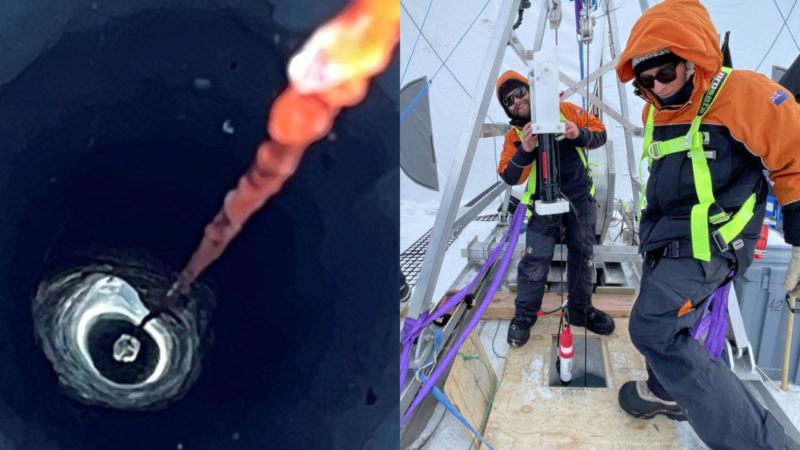
Before locating the ice, the researchers melted it to a depths of 1600 feet. It was nearly as lengthy as Sydney Harbor, 300 yards broad, and 800 feet thick.
It was completely dark and really cold. To say the very least, it’s not the most inviting setting.
Notwithstanding this, when the investigators slipped a camera down into the hole, they spotted swarms of small amphipods.
These microscopic animals are linked to lobsters, crab, and mites, and their abundance indicates that an important environmental activity is going on under the ground.
“We initially believed sth was wrong with the cam, but when the increased, we noticed a swarm of arthropods around 5mm in size,” stated Craig of NIWA’s Marine Physics Unit.
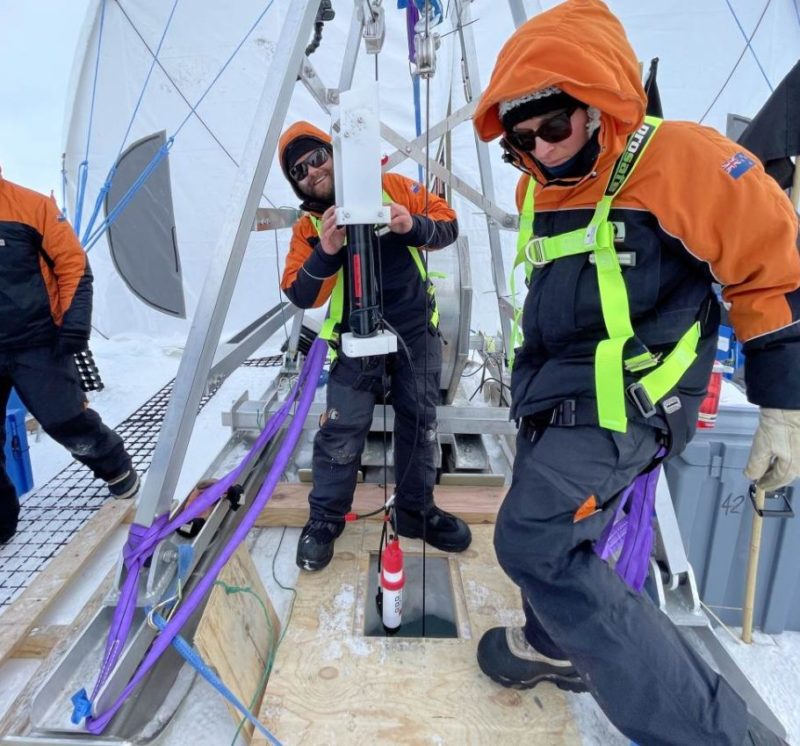
The tiny marine amphipods crowded the cam, which had been dropped into the bottom of the river.
Regardless of the fact that the visit was intended to look into the effects of climate alter, the group saw something no one expected to witness.
This subterranean area demonstrates how mysterious Antarctica is, and how little we ponder about what is below the gigantic sheets.