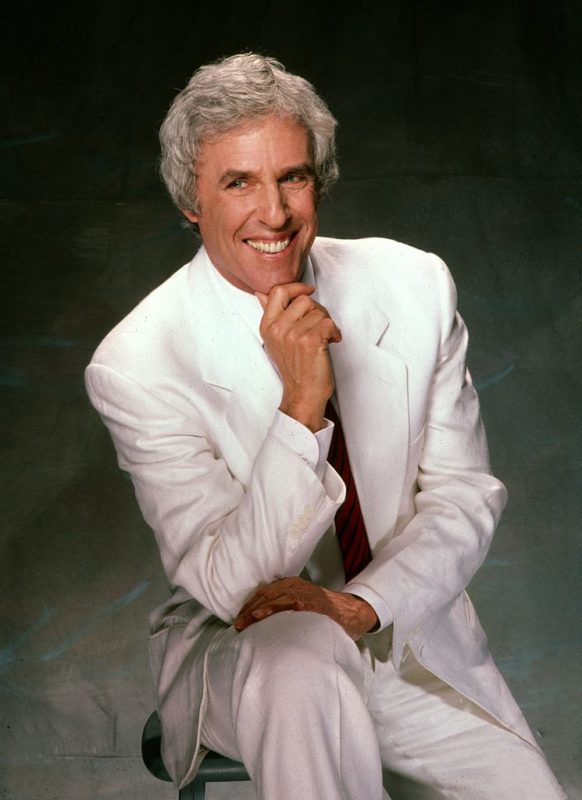
Burt Bacharach, a renowned composer in the realm of 20th-century pop music, passed away at the age of 94.

The announcement of his demise was made by Bacharach’s publicist, who informed the Associated Press that the distinguished composer had succumbed to natural causes stemming from old age.
Bacharach’s musical contributions left indelible marks on several decades, encompassing the 1950s, 1960s, 1970s, and 1980s. His prolific career not only yielded iconic movie soundtrack compositions but also propelled numerous music artists to the top of the charts. Over the course of his illustrious journey, he achieved more than 50 chart-topping hits in both the United States and the United Kingdom, collaborating with luminaries such as Dionne Warwick, Frank Sinatra, The Beatles, Barbra Streisand, Tom Jones, Aretha Franklin, and Elvis Costello, among others.
Bacharach’s most frequent collaborator was lyricist Hal David, and together, they crafted timeless classics like “What The World Needs Now Is Love,” “I Say A Little Prayer,” “Walk on By,” “Alfie,” “What’s New Pussycat?” and many more, with their list of achievements seemingly endless. In 2008, Bacharach received a lifetime achievement Grammy, earning him the title of music’s “greatest living composer.” In addition to this prestigious accolade, he garnered three Oscars, two Golden Globes, and an additional five Grammy awards. Bacharach was a unique figure who both innovated and paid homage to various art forms, leaving an indelible mark on the world of music, which he devotedly cherished.
Despite being married four times, Bacharach’s deepest connection was undeniably with the creation of music, a passion he wholeheartedly embraced from a young age. Born in Kansas City, Missouri, he grew up in Kew Gardens, New York, displaying an early fascination with music, particularly jazz.
While some categorized his music as “easy listening” or as an old-fashioned style, his effervescent pop melodies and smooth, jazzy instrumentals became synonymous with the 1960s. His compositions found their way into popular culture, featuring prominently in both “Mad Men” and the “Austin Powers” film franchise. Bacharach even made a memorable cameo in the second Austin Powers film, performing “I’ll Never Fall in Love Again” on an open-top bus alongside Elvis Costello, endearing himself to audiences through his unexpected appearances.
What’s more, his song “The Look of Love” played a pivotal role in shaping the character of Austin Powers, as Mike Myers was inspired while listening to it on his way home from hockey practice, as reported by Entertainment Weekly. Bacharach, reflecting on this influence, remarked that he arrived at it not through intellectual deliberation but by embracing the sensual allure of the song and pondering the bygone era of “swingers.”
Discussing Bacharach, Elvis Costello observed in a 2018 interview with The Associated Press, “The shorthand version of [Bacharach] is that he’s something to do with easy listening. It may be agreeable to listen to these songs, but there’s nothing easy about them. Try playing them. Try singing them.”
During the creation of some of his most unforgettable compositions, Bacharach grappled with profound grief. After enduring four failed marriages, he tragically lost his 40-year-old autistic daughter to suicide. Although she had struggled with her condition from a young age, it took medical professionals thirty years to diagnose her with Asperger’s syndrome.

Six years later, she took her own life. These profound personal hardships deeply influenced Bacharach’s music, infusing it with a profound sense of emotion.
Burt Bacharach, may you rest in peace, knowing that your timeless melodies will endure for generations to come.