
He thought he had found a strange “little dog” but it was another animal about to cross the rainbow

A woman was walking through the streets of Virginia, United States, when she saw in the distance a helpless “little dog” in a very bad condition.
Without hesitation, he approached to provide all the help that was within his reach, but when he faced the animal, he noticed that it was not a puppy but a bear that was in terrible condition, it was obvious that he barely had the strength to walk.
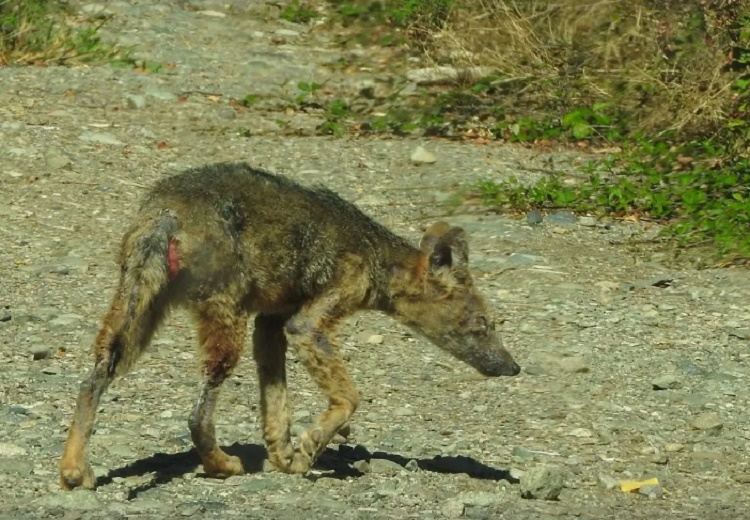
A woman sees a puppy in a very bad condition walking around the neighborhood but discovers that it was a bear.
puppy
Obviously the woman, who did not want to reveal her identity, could not provide first aid herself, although the bear was in a very bad condition and almost out of breath, he was still a wild animal, so he had to act very wisely.
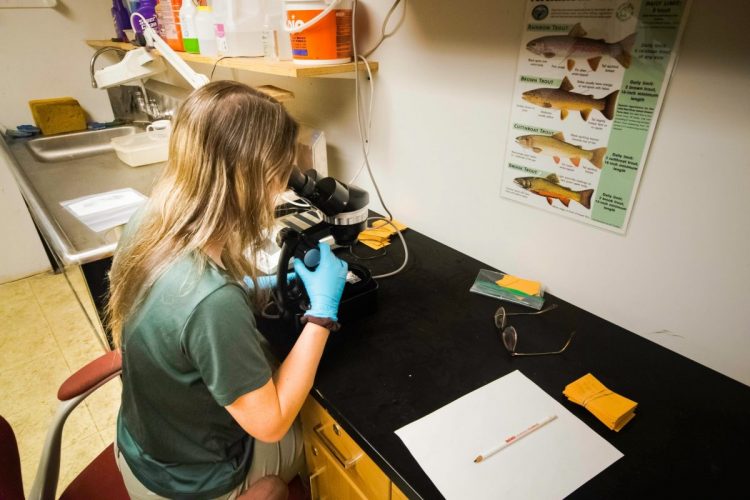
He didn’t want to abandon him and let fate take care of him, so he decided to contact the Virginia Department of Wildlife Resources, so that they would come to the aid of the dying bear.
It was a be
ar cub.
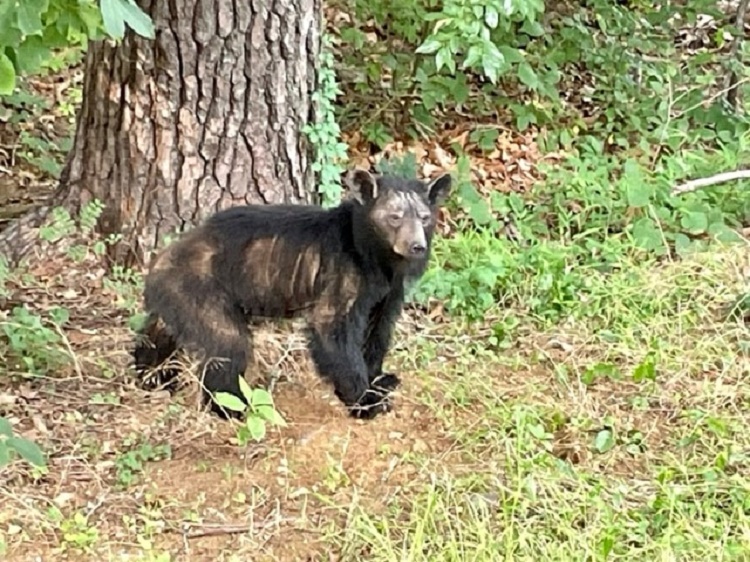
Fortunately, the rescue group did not take long to arrive, from the first sighting they managed to identify that it was a cub bear with a rather complicated disease to treat.
They explained to the woman that unfortunately he was not the only specimen that was in this situation, since it was a very contagious condition, many other bears were suffering from the same thing.
That little bear was suffering from mange, his body was covered with large sores and he had alopecia on some parts of his skin.
As reported by The Washington Post, this is caused by mites that take on greater strength at certain times of the year affecting hundreds of black bears that live in the wild.
Unfortunately, images are often captured of specimens that show clear symptoms of being affected by scabies, a disease that affects the skin with hair loss, but obviously it must have greater repercussions on the ecology and especially on the behavior of the specimens that suffer from it.
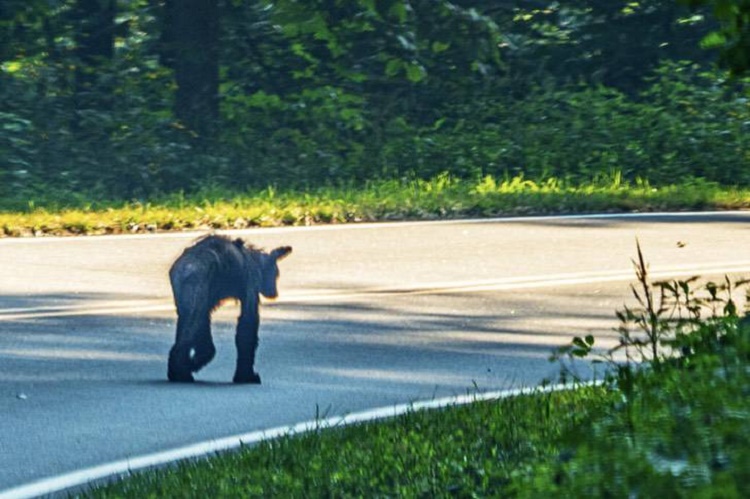
Although it is not certain how it all started, various specialists agree that it is a rather serious situation. Biologist Katie Martin commented on this:
“Fighting the disease is very difficult because it is difficult to isolate sick individuals from each other. There are no plans for a large-scale treatment, but we are conducting a research initiative to examine the movement rates of infected bears.”
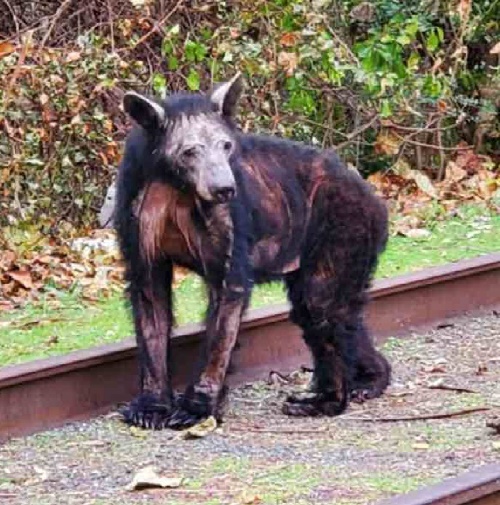
Unfortunately, there is an alarm about a possible increase in scabies in wildlife, intense itching, irritated skin that culminates with wounds and scabs, and alopecia, are some of the symptoms produced by the microscopic Sarcoptes scabiei mite, the one responsible for sarcoptic scabies.
Although we are familiar with cases in domestic animals, wildlife has not been freed of this parasite, affecting them dramatically with a physiological imbalance that can cause the death of individuals.
Fox with mange problems.
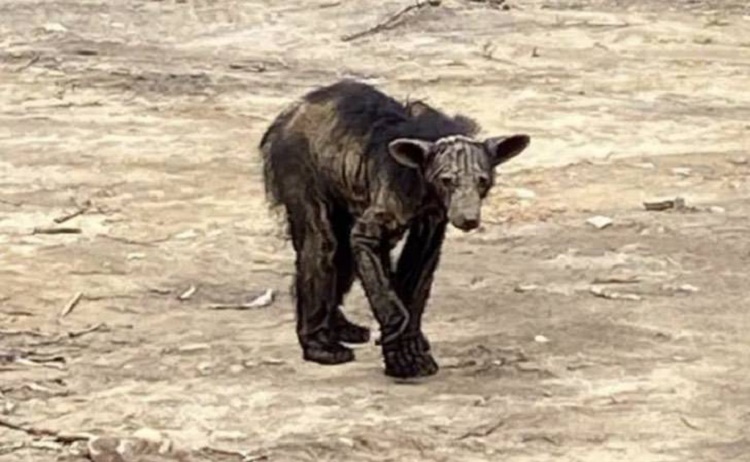
There are many researchers who join to try to solve a problem that undoubtedly affects us all as a society.
The researcher Diego Montecino-Latorre carried out a study in collaboration between the University of Chile, the One Health Institute of the University of California at Davis, in this regard highlighted:
“The next step is to see if scabies has any impact on conservation. The impact on the well-being of individuals definitely has. It is a rather unfortunate disease, they suffer a lot, everything hurts, they itch, they have infections and fever, they die in three months of starvation. Now from the point of view of diversity, we have to see if it is controlled on its own, if it is maintained, has impacts, or is going to remain at some permanent level over time. To do all that we need to install a real system to do a better tracking of these animals.”
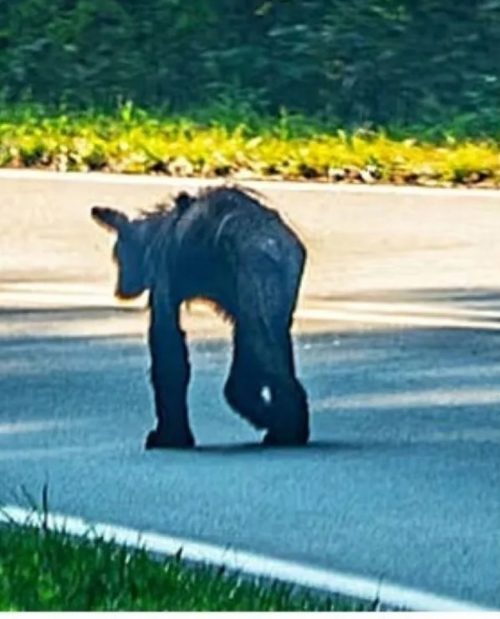
In a sense, there is a strong alarm about the condition that many specimens seem in wildlife, although there are many practical and logistical difficulties involved in working on the ground, such as capturing wild specimens, taking samples and their subsequent analysis, we should not underestimate an increasingly latent reality in our fauna.
We wish that all the competent entities come to this call and propose a solution to eradicate with a plague that increasingly affects more defenseless little animals.


