A ten-month-old infant and a young chimp were among those who took part in the experiment.
They were both victims of science, and they were not the first nor the last.
There have been situations in history where scientists experimented on their offspring.
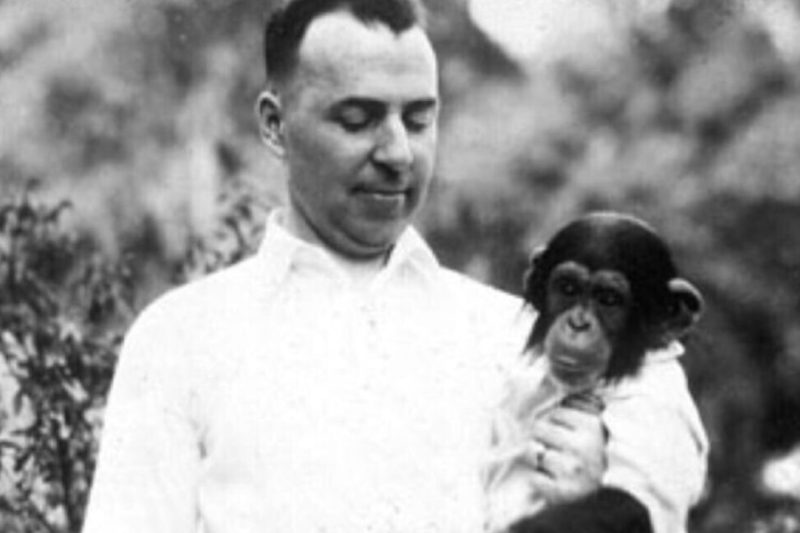
So psychologist Winthrop Kellogg and his wife decided to investigate what would happen if a child and a chimp were reared in the same manner from infancy.
Kellogg was a lecturer at Indiana University before embarking on his most famous experiment.
He investigated rats’, birds’, and other creatures’ anxieties. Kellogg researched the history of Mowgli children who were raised with animals.
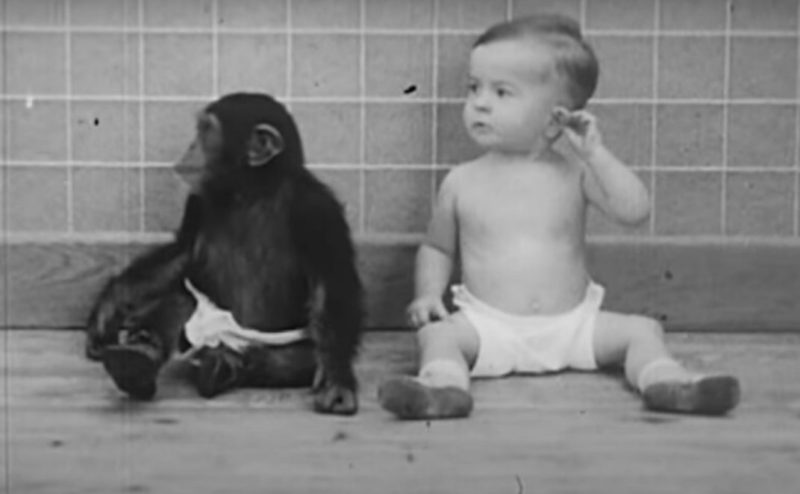
He pondered why they couldn’t mingle despite being around others for such a long period.
Kellogg applied to the Yale Center for the Study of Great Apes in 1931.
He brought Gua, a 7-month-old chimp, from there to nurture. Donald, the scientist’s kid, was 10 months old at the time. They are about the same age.
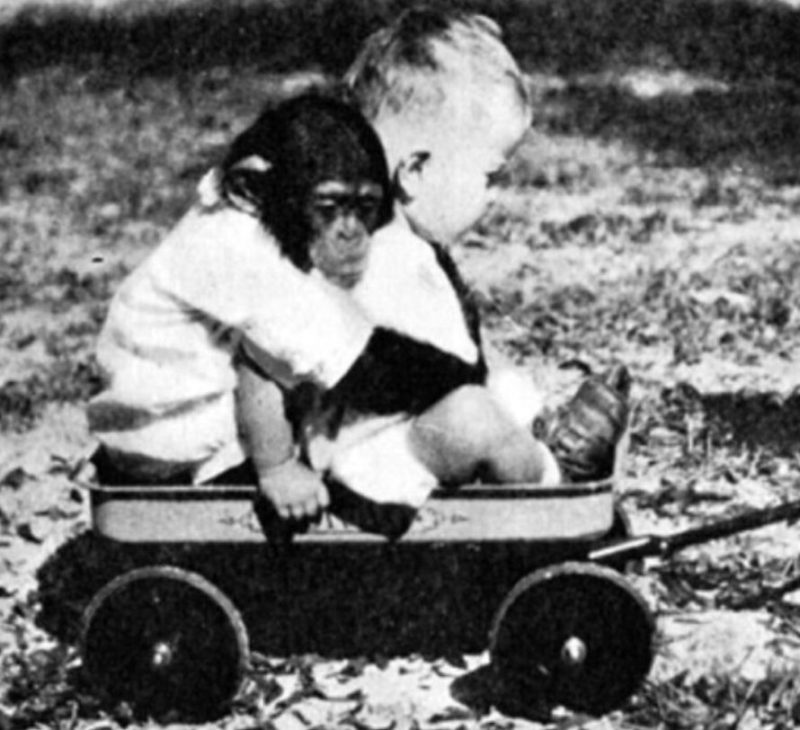
The Kelloggs set up the same settings for their kid and the monkey. Gua had the same clothing, toys, furnishings, and demeanor as Donald.
Gua soon adjusted and discovered a shared language with Donald.
They grew raised together, and their parents closely observed and examined their progress.
Reflexes, motions, dexterity, verbal comprehension, fears, and concentration were all evaluated.
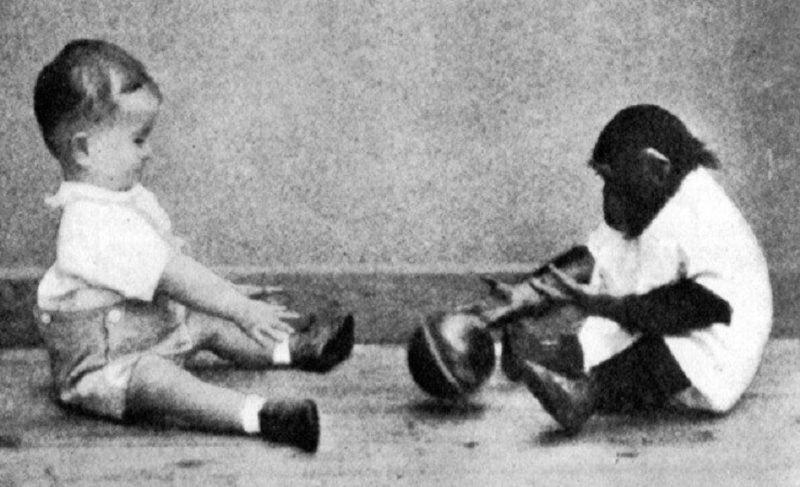
Gua was ahead of Donald in the first six months of the trial. The chimp learnt to drink from a glass, eat with a spoon, and open the doors by herself.
She had roughly 50 sentences and directives memorized. Imitated people’s conduct and communicated her affection with kisses and embraces.
Kellogg determined that this is due to chimps maturing faster. However, Goa has been trained how to use the toilet for a longer period of time.
She had no idea how to use a pencil and could never talk in a comprehensible manner.
A year and a half later, Kellogg found that no circumstances could affect genetic traits.
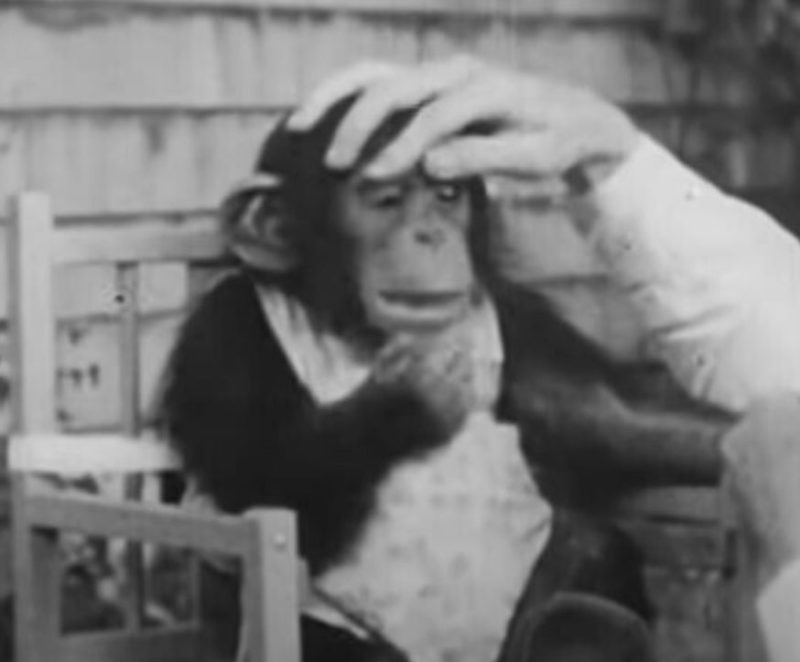
When Donald was a year and a half old, the study was called off.
He began imitating Gua’s actions, which concerned his parents. The duo came to the conclusion that a person is more prone to turn into a chimp than vice versa.
They concluded that training can assist an animal grow more human-like, but only up to a degree.
Gua was transferred to the Yale Center for Great Ape Research. Gua was treated horribly.
She was forcibly removed from her customary habitat at first, and then unexpectedly returned.
She died of pneumonia 2 years after the trial ended.

There is very no information available about Donald. He committed suicide at the age of 42, according to some stories.
Psychologists started to question the Kellogg study after learning about it.
To begin with, experimenting on a newborn is clearly immoral. Second, they were disturbed about the brutality shown to the infant chimp.
There were others who thought Kellogg’s contributions to the study of human-primate relationships was substantial.
The importance of this experiment is that no one has attempted to replicate it since 1931.
Share this incredible story with your friends and family to make their day.